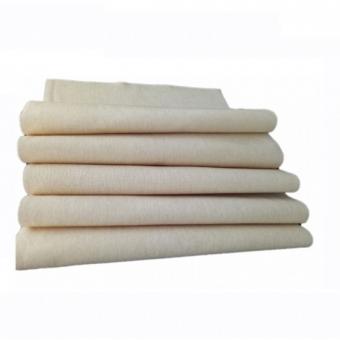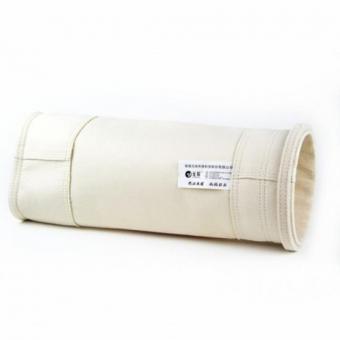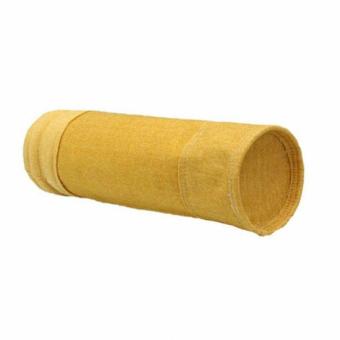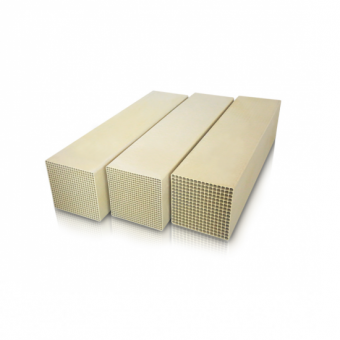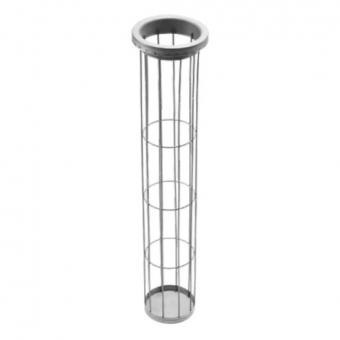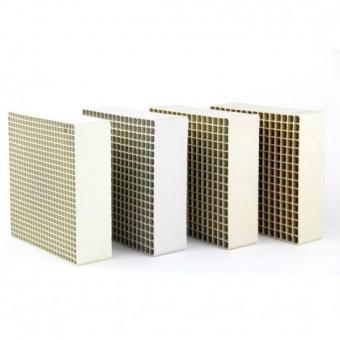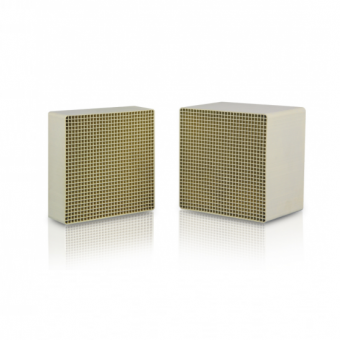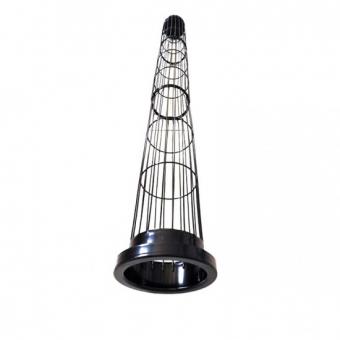
When your process air operates continuously above 180°C (356°F), standard filtration media like polyester or polypropylene will fail within hours. Managing fly ash from coal-fired boilers, clinker dust from cement rotary kilns, or aggressive gases from waste-to-energy plants requires dedicated high temperature bag filters: complete filtration solutions for extreme conditions. True operational reliability requires balancing dust release, mechanical flexing, and intense thermal resistance.
There is no single "magic fabric" for extreme conditions. In our field diagnostics, we analyze the exact gas chemistry—specifically looking for moisture levels, oxygen content, and acid dew points—before picking a needle felt or woven structure. Here are the true workhorses of high-temperature industrial gas cleaning:
Selecting the right fiber polymer is only 50% of the battle. In our engineering practice, the majority of field failures do not stem from the fabric melting; they happen due to mechanical shortcuts or chemical oversight at the manufacturing level.
Traditional needle felts rely on depth filtration, meaning dust particles travel inside the cross-section of the fabric before forming a dust cake. Over months of heavy loading, fine sub-micron dust becomes deeply embedded. This increases your differential pressure drop, forcing your ID fans to work harder and driving up facility electric bills.
To eliminate this energy drain, we apply an advanced ePTFE (expanded Polytetrafluoroethylene) membrane to the face of the high-temperature felt. This turns the process into absolute surface filtration.
The micro-porous membrane blocks dust particles at the very surface while letting air molecules pass through freely. When the pulse-jet cleaning system fires, the dust cake releases cleanly and effortlessly. Your system runs at a lower, stable differential pressure, extending the overall bag life by up to 100% and reliably keeping emissions below 5 mg/Nm³.
If you are replacing your baghouse filters every few months, struggling with erratic airflow, or receiving warning signs from environmental emission monitors, your filtration media is mismatched to your工况 (operating conditions). Upgrading to a custom-configured high temperature bag filters: complete filtration solutions for extreme conditions will stabilize your differential pressure, lower your fan power consumption, and stop unscheduled maintenance shutdowns. Let our technical engineering group evaluate your gas velocity, temperature curve, and chemistry metrics to design your next reliable filter array.
Sanyuan Industrial Zone, Xinzhan Area, Hefei, Anhui, China
Office in Shanghai: Room 602, Block E, Poly Plaza, Pudong, Shanghai, China
Correo electrónico : info@yc-group.com
Skype : filterbag-cage
Mp : +86 15056565116
(Servicios al cliente de 24 horas.)
Contact Person : Ryan Kang
MP : +82-10-4842-3326
Company Name : Respring Co.,Ltd
Contact Address : 3F, 133 Maean-ro, Haeryong-myeon, Suncheon-si, Jeollanam-do, ROK