In coal-fired power plant flue gas denitrification, the Selective Catalytic Reduction (SCR) catalyst serves as the core engine. The stability of DeNOx efficiency, compliance with emission standards, operational costs, and overall system lifespan all depend heavily on catalyst performance.
For plant operators, engineers, and procurement managers, issues like catalyst plugging, poisoning, mechanical wear, and premature deactivation are common headaches. This guide breaks down the essential technical aspects of SCR catalysts: chemical composition, selection standards, structural comparisons, deactivation mechanisms, and end-of-life management.
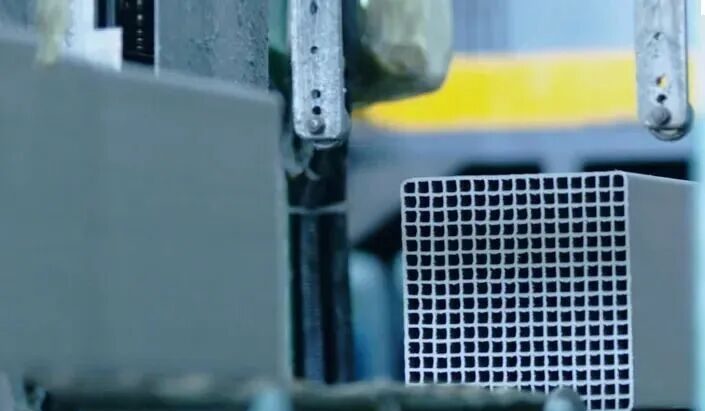
1. Chemical Composition of SCR Catalysts
Commercial SCR catalysts for power plants are multi-component composite systems. The precise formulation determines the catalyst's operating temperature window, DeNOx activity, and resistance to chemical poisoning. Typical industrial formulations include:
-
Titanium Dioxide (TiO₂): The primary carrier/substrate (typically in the anatase form). It provides the structural surface area to disperse active phases, suppresses SO₂ oxidation, and ensures stability under harsh, corrosive flue gas conditions.
-
Vanadium Pentoxide (V₂O₅): The primary active phase. It drives the redox reaction that reduces NOx into N₂ and H₂O. Its concentration is tailored based on the specific flue gas temperature and concentration profile.
-
Tungsten Trioxide (WO₃): A promoter that enhances thermal stability, prevents structural sintering at high temperatures, and strengthens the electronic interaction between the active phase and the carrier.
-
Molybdenum Trioxide (MoO₃): An optional promoter used specifically to enhance arsenic resistance. It is critical for plants burning high-arsenic coal.
-
Structural Additives (SiO₂, Al₂O₃): Added to improve mechanical strength, fracture toughness, and erosion resistance in high-dust environments.
2. 5 Engineering Metrics for Quality Evaluation
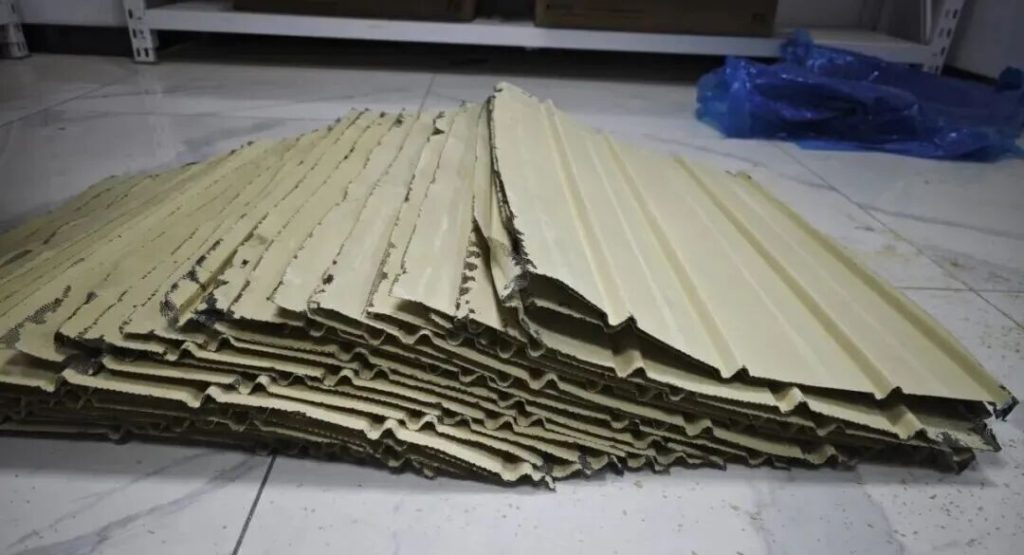
To withstand the harsh environments of power plant flue gas (high dust, high temperature, and complex chemical trace elements), a high-grade SCR catalyst must satisfy five distinct technical requirements:
-
High DeNOx Activity: Sustained, high-efficiency NOx removal rates across varying boiler loads, ensuring strict compliance with local emission limits.
-
Optimal Reaction Selectivity: Ensures the reducing agent (NH₃) reacts precisely with NOx rather than being oxidized by oxygen. This maximizes chemical efficiency and minimizes downstream ammonia slip.
-
Superior Mechanical Integrity: High crushing strength and erosion resistance to withstand continuous bombardment by high-velocity fly ash particles, preventing structural cracking during installation and operation.
-
Robust Poisoning Resistance: The ability to resist chemical attack from trace elements within the fly ash, such as arsenic, alkali metals, and alkaline earth metals.
-
Balanced Chemical Stability: Minimal SO₂ to SO₃ oxidation rates (typically below 1%), excellent thermal shock resistance, low pressure drop, and a long guaranteed service life.
3. Structural Variations: Honeycomb, Plate, and Corrugated
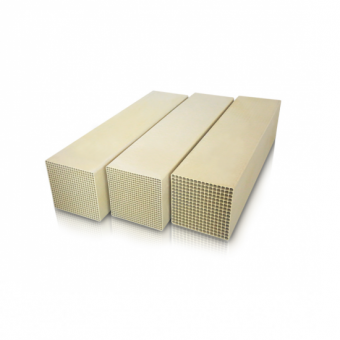
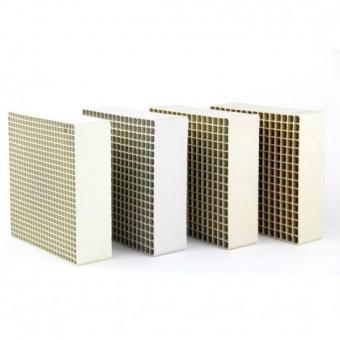
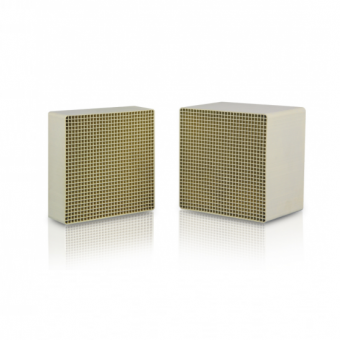
Commercial SCR catalysts are manufactured in three distinct geometric configurations. Choosing the right geometry depends directly on the fly ash concentration and the layout configuration of the power plant.
[caption id="attachment_3385" align="alignnone" width="1024"]
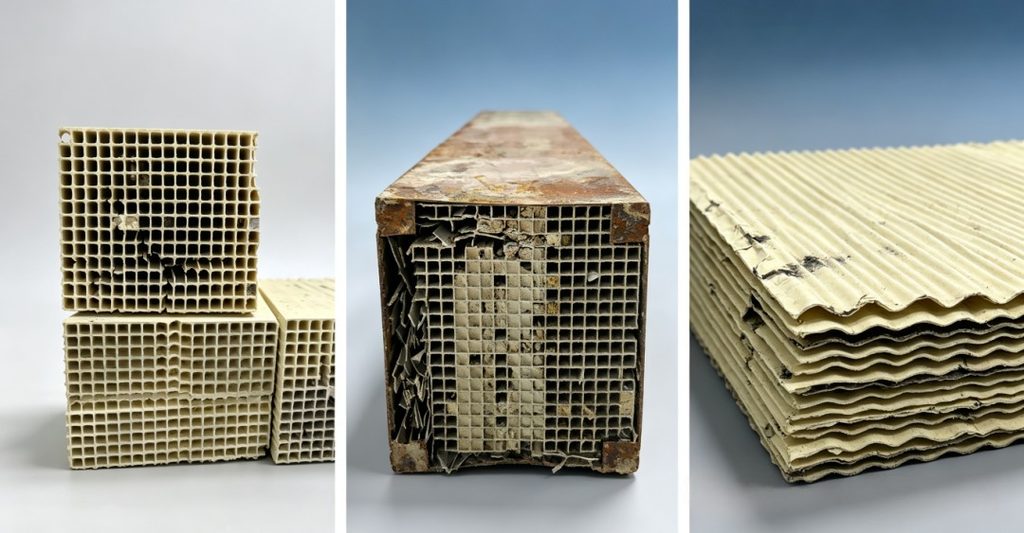
Honeycomb, plate, and corrugated catalysts[/caption]
|
Feature
|
Honeycomb Type
|
Plate Type
|
Corrugated Type
|
|
Substrate / Base
|
Extruded homogeneous ceramic (no mesh)
|
Stainless steel mesh base with active coating
|
Fiberglass matrix with active coating
|
|
Specific Surface Area
|
High (400-800 m²/m³)
|
Medium (300-400 m²/m³)
|
High (500-700 m²/m³)
|
|
Active Mass Content
|
100% Homogeneous
|
Limited to surface coating
|
Limited to surface coating
|
|
Erosion Resistance
|
Excellent (susceptible to edge wear)
|
Outstanding (flexible substrate)
|
Moderate (prone to fiber exposure)
|
|
Plugging Resistance
|
Moderate (requires optimized pitch)
|
High (parallel plate design)
|
Low (dense wave pattern)
|
|
Best Suited For
|
High-dust & Low-dust layouts
|
Extremely high-dust/abrasive gas
|
Low-dust & Gas-fired applications
|
4. Primary Deactivation Mechanisms and Mitigation
[caption id="attachment_3384" align="alignnone" width="1024"]
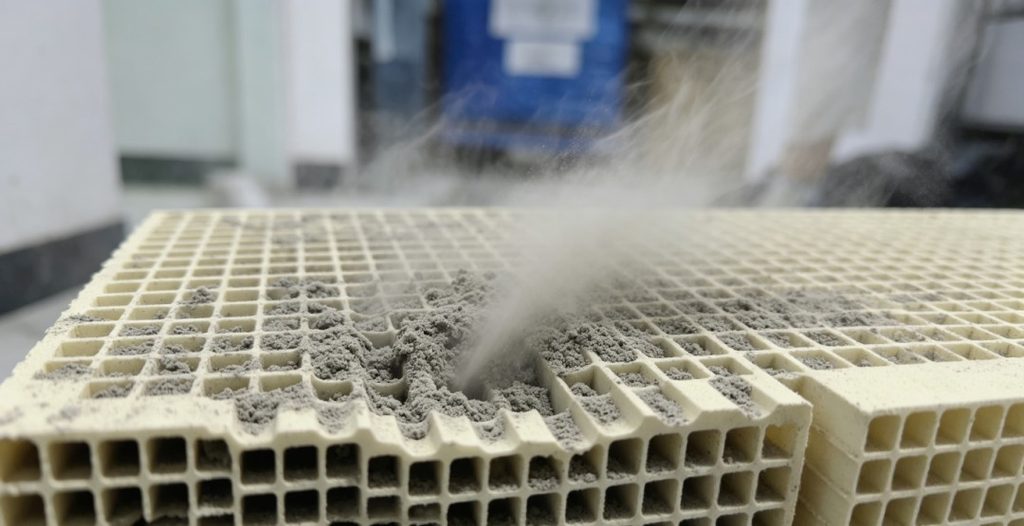
SCR catalyst deactivation[/caption]
Catalyst deactivation is categorized into physical degradation and chemical poisoning. In typical coal-fired units, fly ash plugging and chemical poisoning represent the primary threats to catalyst longevity.
Thermal Sintering
Prolonged exposure to temperatures exceeding the design limit causes the TiO₂ carrier matrix to shift from anatase to rutile phase. This crystal growth collapses the micropore structure, drastically reduces the specific surface area, and permanently isolates active sites.
Mitigation: Strict operational adherence to the designated temperature window; inclusion of WO₃ in the catalyst formulation to raise the sintering threshold.
Fly Ash Plugging and Fouling
Fine particulates within the flue gas accumulate inside the catalyst channels, blocking gas access to the active pores. Furthermore, localized ash accumulation concentrates poisonous trace elements on the catalyst surface.
Mitigation: Installation of upstream ash baffles or acoustic/sonic horn sootblowers; optimizing flue gas velocity profiles via CFD modeling; selecting larger pitch sizes for high-dust applications.
Chemical Poisoning
-
Alkali Metals (Na, K): These elements substitute the hydrogen ions in the catalyst's active V-OH acid sites, permanently neutralizing the chemical activity. This effect accelerates in high-moisture environments.
-
Alkaline Earth Metals (CaO): Gaseous calcium or fine lime particles react with SO₃ in the flue gas to form Calcium Sulfate (CaSO₄), which creates a hard, crust-like barrier over the active pores.
-
Arsenic (As): Gaseous arsenic (As₂O₃) diffuses into the catalyst's interior pore structure, forming a stable compound with vanadium that permanently deactivates the active sites. Mitigation: Specifying a high-MoO₃ formulation to chemically trap arsenic before it reaches the vanadium sites.
Ammonium Bisulfate (ABS) Deposition
When operating below minimum continuous operating temperatures, SO₃ reacts with slipped ammonia to form Ammonium Bisulfate (NH₄HSO₄). ABS is a highly viscous, sticky compound that glues fly ash into the catalyst pores, causing rapid pressure drops and structural corrosion.
Mitigation: Implementing low-load ammonia injection cut-off interlocks; periodic thermal regeneration (heating the catalyst to ~350°C to decompose the ABS deposits).
Mechanical Erosion
Continuous high-velocity bombardment by abrasive fly ash particles erodes the catalyst walls and channels, leading to structural thinning and structural failures.
Mitigation: Implementing structural edge-hardening (top-end hardening with specialized resins during manufacturing); controlling local face velocities within the reactor chamber.
5. End-of-Life Management: Regeneration and Recycling
Spent SCR catalysts represent a substantial environmental liability if mismanaged, but they also hold significant economic value due to their titanium, vanadium, and tungsten content.
Catalyst Regeneration
If the structural matrix remains intact and deactivation is primarily driven by physical plugging, ABS fouling, or mild chemical masking, the catalyst is a prime candidate for regeneration. The process involves:
-
Dry Cleaning: Sonic or mechanical removal of bulk fly ash.
-
Chemical Washing: Utilizing specialized aqueous solutions (acidic or alkaline washes) to strip away accumulated alkali metals and calcium compounds without stripping the active vanadium phase.
-
Re-impregnation: Re-dipping the washed catalyst substrate into an active component bath (V₂O₅/WO₃ precursor solutions) to restore the original DeNOx activity profiles to near-factory specifications.
Safe Recycling and Metal Extraction
When severe thermal sintering or irreversible arsenic poisoning renders regeneration impossible, the catalyst must undergo recycling. Specialized pyrometallurgical or hydrometallurgical processes are deployed to crush the spent modules, dissolve the matrix, and selectively extract High-purity Vanadium Pentoxide and Tungsten derivatives. The remaining titanium-rich residue is frequently diverted into the concrete, cement, or ceramic manufacturing supply chains, establishing a closed-loop, zero-waste lifecycle.